 SANDU DanielaVIEW PROFILE →
HR and Finance Speak Different Languages. They Shouldn't.
HR and Finance often look at the same business and see different things. HR sees people, leadership, capability and retention. Finance sees cost, productivity, margins and return. Neither perspective is wrong. The problem begins when they remain separate.
HR sees a team under pressure.
Finance sees rising costs.
HR sees the risk of losing critical talent.
Finance sees a productivity challenge.
HR sees a manager who may not yet be ready for the complexity of the role.
Finance sees a business unit that is not delivering the expected results.
Both may be right.
But each is seeing only part of the picture.
And this is where, for me, the more interesting question begins:
How do we connect the reality of people with the financial reality of the business?
Different perspectives are not the problem
HR and Finance should think differently.
Finance brings financial discipline. It helps us understand cost, return, productivity and whether our decisions are economically sustainable.
HR should bring an equally rigorous understanding of whether the organization has the people, leadership, skills and capacity required to deliver what the business expects.
We need both.
The problem begins when these conversations happen in parallel.
HR talks about engagement, retention or leadership without making the business impact clear enough.
Finance looks at cost and productivity without always seeing the organizational reality behind the numbers.
And that is when we can end up with decisions that make perfect sense in a spreadsheet but are much harder to execute in real life.
A financial model can tell us what should happen. The organization tells us whether it actually can.
People are a cost. But they are also capacity.
We often say that people are our most important asset.
Yet when major business decisions are made, the conversation can quickly become one about headcount and cost.
Of course people represent a significant cost. It needs to be understood and managed with discipline.
But it is only part of the equation.
Take a critical role that remains vacant for six months.
What is the real cost?
Is it simply the salary we did not pay?
Or is it also the decisions that were delayed, the additional pressure placed on the team, the projects that moved more slowly and the opportunities nobody had the capacity to pursue?
The same is true of leadership.
What does an unprepared leader actually cost a business?
Not just in compensation.
Think about poor decisions, slower execution, good people who eventually leave, or a team consistently performing below its potential.
These things are harder to put into a spreadsheet.
That doesn't make them less real.
HR has work to do as well
I don't see this as a Finance problem that HR needs to solve.
HR has its own responsibility.
If we want Human Capital to have a meaningful place in strategic business conversations, we need to become much better at connecting people decisions with business outcomes.
It is not enough to say engagement has declined.
What is happening in the business because of it?
It is not enough to say we need to invest in leadership development.
What business problem are we trying to solve?
And saying turnover is too high tells us very little on its own.
Where is the turnover? Which people are we losing? What capabilities are walking out of the door? What is the impact on customers, productivity or growth?
For me, this is where HR becomes a true business function.
Not by talking more about people, but by being able to explain how people and organizational capability create, protect or limit business value.
Sometimes the number is the outcome, not the cause
This is something I have become increasingly conscious of over the years.
We see a number and naturally react to it.
Productivity is down. Costs are up. Turnover is too high. A business unit is underperforming.
The natural question is: What should we do?
I would start with another one:
Why is this happening?
Low productivity may mean we have too many people.
But it may also mean poor processes, outdated technology, unclear accountability or too many layers of approval.
High turnover may be a compensation issue.
Or it may be a leadership issue.
High workforce cost may be structural. Or perhaps highly paid people are spending too much of their time doing work that could be simplified, redesigned or automated.
The number matters.
But understanding what is producing the number matters just as much.
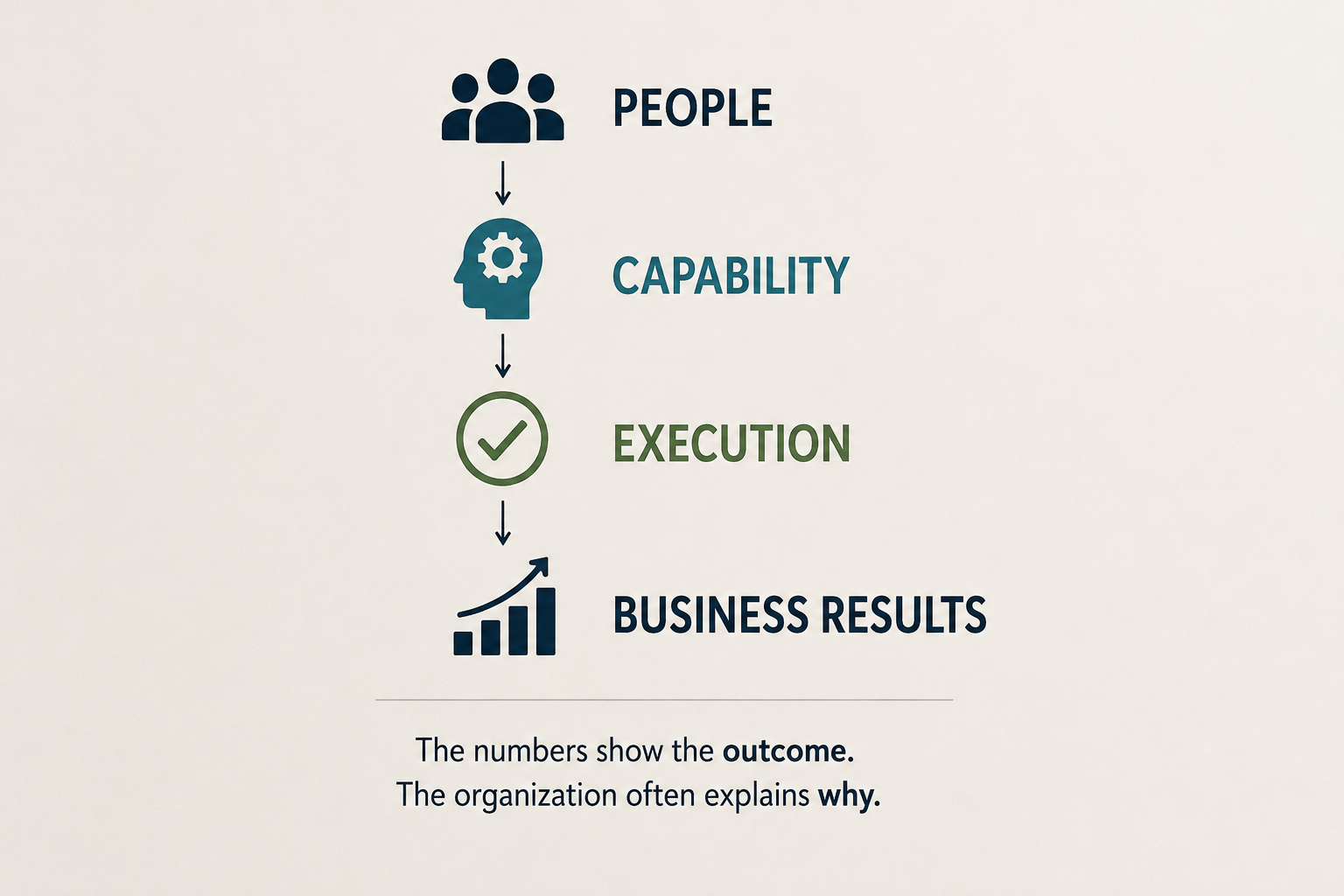
Numbers are very good at telling us what is happening. They do not always tell us why.
And this is precisely where HR and Finance need each other.
One business, one conversation
A company can build an excellent financial plan and set clear targets for growth, margin and productivity.
But between that plan and the result sits the organization.
Do we have the capabilities the strategy requires?
Can our leaders lead the change we are asking for?
Do teams have the capacity to absorb it?
Can decisions happen at the speed the business needs?
If not, this is no longer an HR problem.
It is a business problem.
In exactly the same way, a workforce model that makes organizational sense but is financially unsustainable is not simply a Finance problem.
It is also a business problem.
I don't think HR needs to become Finance, or Finance needs to become HR. The difference in perspective is valuable.
A good CFO should challenge assumptions about workforce investment.
A good CHRO should challenge assumptions about whether a financially attractive decision is organizationally realistic.
That tension can make decisions better.
But we need a common language.
One where we can discuss cost and capability in the same conversation. Productivity and what actually drives it. Restructuring and the capabilities we cannot afford to lose. Investment in people and the business outcome we expect from it.
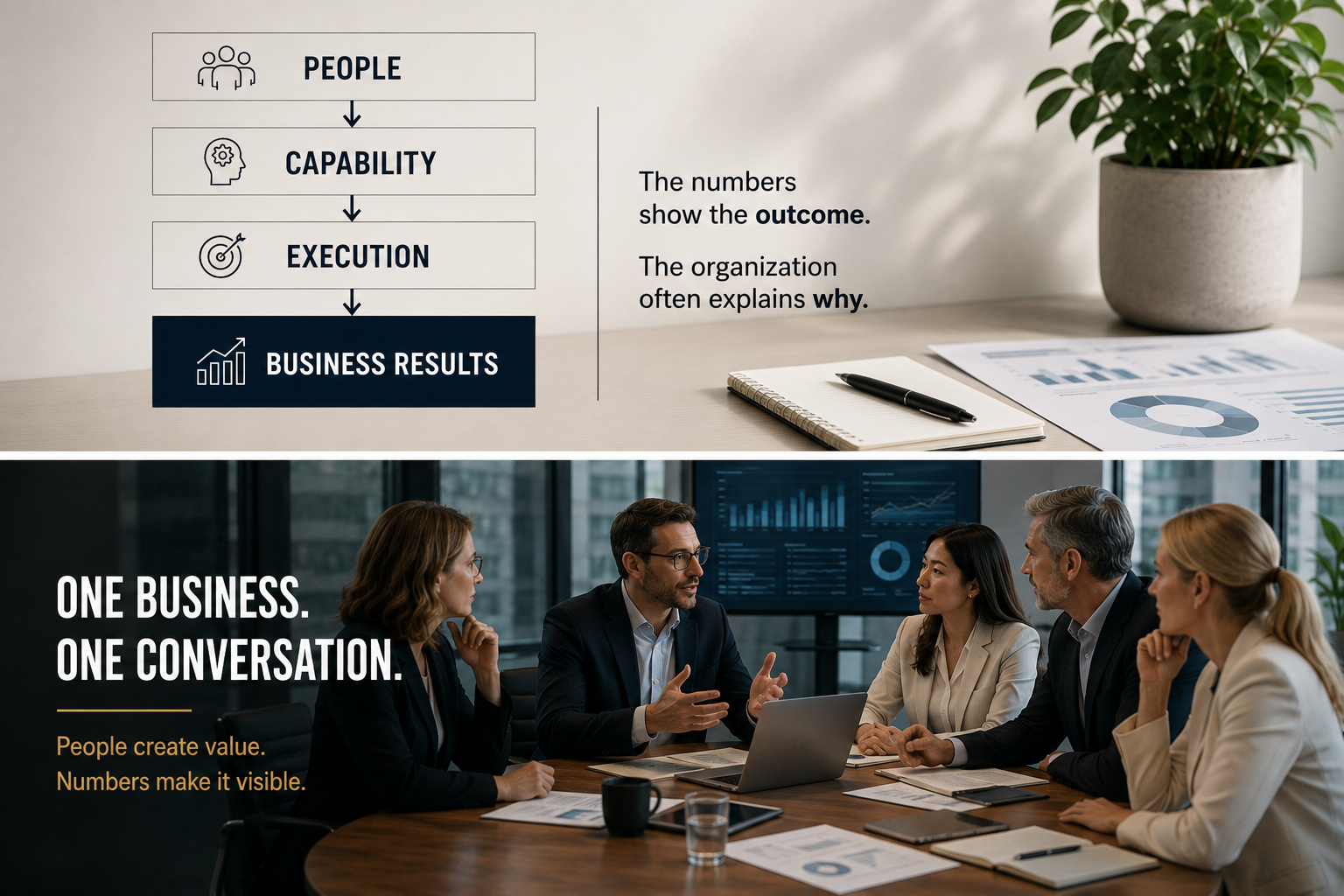
After more than two decades working in Human Capital and organizational transformation, I increasingly see people and numbers not as two different stories about a business, but as two ways of reading the same story.
Perhaps the question HR and Finance should ask together more often is simply:
What needs to be true — financially and organizationally — for this strategy to work?
Because ultimately, strategy has to work in both worlds.
Results are measured in numbers.
But they are built by people.